

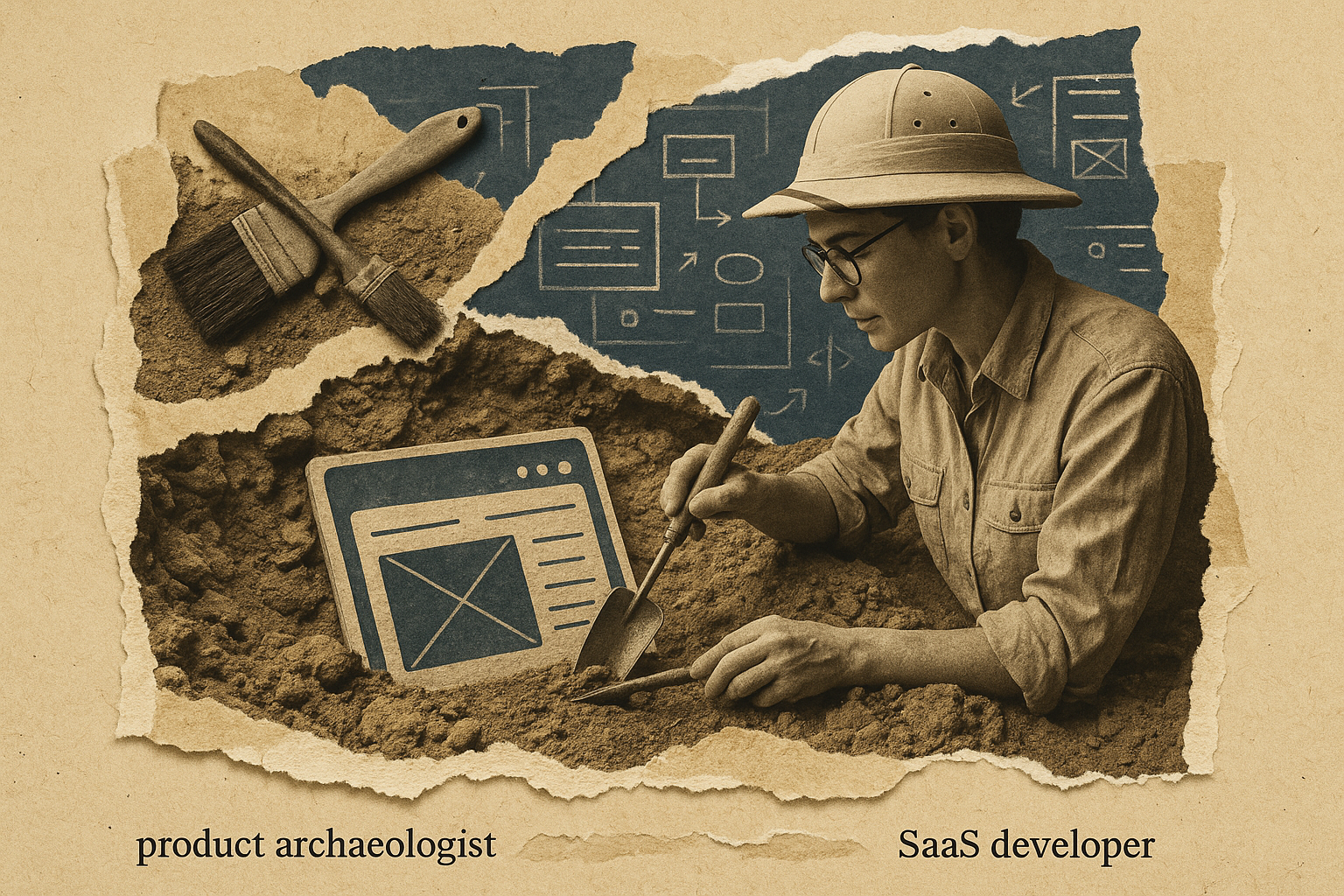
In the fast-paced world of SaaS development, companies often focus on innovation and speed. But the rush to release new features can sometimes overshadow the value of understanding what already exists. That's where a "product archaeologist" comes in. This role is about exploring the layers of your product's history to find insights that can drive strategic decisions.
Unearthing Hidden Value
When we talk about product archaeology, we're discussing a deep dive into your SaaS product's existing features and data. This isn't just about bug-fixes or maintenance; it's about uncovering insights that are buried under layers of past updates and feature additions.
For example, a product archaeologist might analyze usage data to identify underutilized features. These insights can inform whether to invest more in refining these features or to phase them out entirely. This role can reveal opportunities for optimization and innovation that are not immediately apparent when focusing solely on future developments.
Learning from the Past
Every feature in a SaaS product has a history and a purpose that may not be fully understood by current team members. A product archaeologist can trace these backstories to understand why certain decisions were made and how they impact the current product landscape.
Understanding past decisions can prevent the repetition of mistakes and help in making more informed choices about which features to develop or retire. This approach aligns with the idea of embracing trade-offs in product development, ensuring that resources are allocated wisely.
Driving Strategic Decisions
Product archaeology can directly influence strategic planning. By understanding what's already built, companies can make more informed decisions about where to invest their development resources. This can lead to a more balanced approach between innovation and stability.
In my experience as a Technical Operations Manager, I've seen how digging into the "why" behind existing features can provide clarity in strategic planning. For example, we once discovered that a seemingly minor feature was critical for a subset of our users, prompting us to invest in its enhancement rather than discontinuing it.
Connecting the Dots
A product archaeologist's work isn't done in isolation. The role requires collaboration across teams, including product management, development, and marketing. By connecting the dots between different departments, a product archaeologist can help ensure that the product development aligns with user needs and business goals.
This cross-functional collaboration is crucial for modernizing IT infrastructure. Leadership plays a pivotal role in fostering this environment, enabling teams to work together seamlessly and share insights effectively.
Tools and Techniques
To be effective, a product archaeologist needs access to various tools and techniques. These might include:
- Data Analytics: Analyzing user data to understand feature usage and identify patterns.
- User Feedback: Gathering insights from user reviews and support tickets to understand pain points.
- Documentation Review: Examining historical documentation to understand the rationale behind past decisions.
- Stakeholder Interviews: Engaging with long-term team members to gather institutional knowledge.
These tools and techniques help in building a comprehensive picture of the product's evolution, leading to more informed decision-making.
The Role in SaaS Development
In the context of SaaS development, the product archaeologist can help balance the need for speed with quality and innovation. This aligns with the idea that speed isn't everything in SaaS product development. By understanding existing features deeply, teams can avoid rushing into new developments that may not add real value.
Implementing the Role
For companies looking to implement this role, it's essential to integrate it into the existing product development framework. Here are some steps to consider:
- Define the Scope: Clearly outline what the product archaeologist will focus on, whether it's feature optimization, user experience improvements, or legacy system assessments.
- Establish Metrics: Set clear metrics to evaluate the success of the role, such as reduced feature bloat or improved user satisfaction.
- Foster Collaboration: Encourage open communication between the product archaeologist and other teams to ensure alignment and shared understanding.
Conclusion
A product archaeologist can be a valuable asset in SaaS development, offering insights that lead to strategic improvements and informed decision-making. By exploring the layers of your product's history, you can uncover hidden value and ensure that your development efforts align with user needs and business objectives.
Sources
- Harvard Business Review: The Real Value of Understanding Your Product's History
- TechCrunch: How SaaS Companies Can Benefit from Product Archaeology
- Forbes: The Role of Retrospective Analysis in Product Development
- Gartner: Leveraging Existing Data to Drive SaaS Innovation
- McKinsey & Company: Strategic Decision Making in SaaS